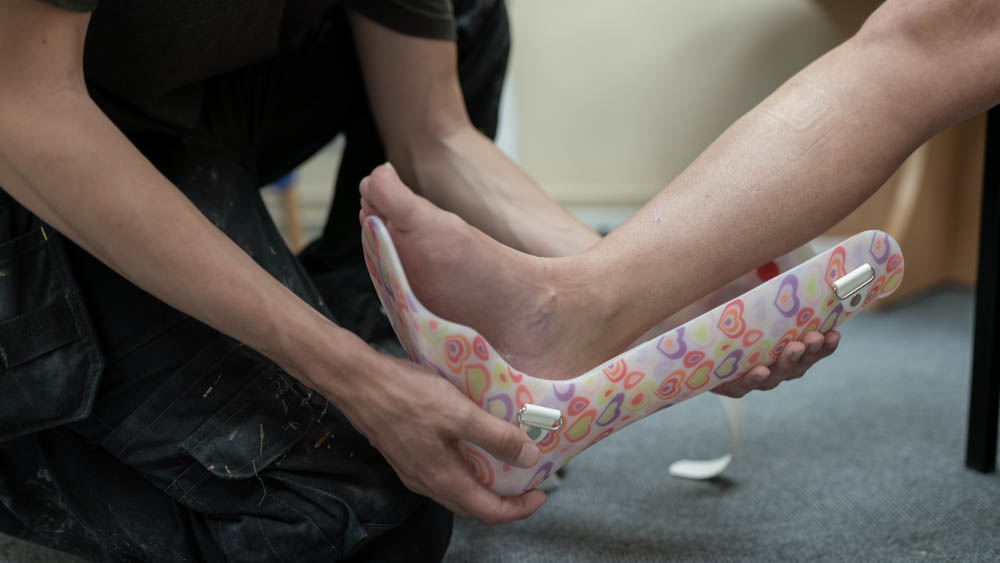
What is Orthotics?
Orthotics are specialized devices designed to support, align, or correct the function of various parts of the body. They are often prescribed to address musculoskeletal issues, enhance mobility, and improve overall comfort. This Orthotic Team includes:
Orthotist – Qualified Professional with Min. Bachelor degree in Orthotics
Orthotic Technician – Qualified Professional with Diploma in Orthotics – eligible only to do technical work under supervision of Orthotist
Bench Workers
What is Orthosis?
- Lower Limb Orthotics:
- Braces for the legs and feet to provide support and alignment.
- Insoles or shoe inserts to address issues like flat feet or uneven gait.
- Upper Limb Orthotics:
- Devices designed to support and assist the arms and hands in their movement.
- Commonly used for conditions affecting hand function or stability.
- Spinal Orthotics:
- Braces or supports for the spine to address issues like scoliosis or provide post-surgical support.
Who is Orthotist?
Orthotists are health care professional who uses evidence-based practice to provide clinical assessment, prescription, technical design, and fabrication of Orthotic devices. Orthotitsts work independently or as part of the health professional team. They set goals and establish rehabilitation plans that include prosthetic services and clinical outcome measures.
An Orthotist is trained in the assessment , evaluation, treatment, design, fitting, and customization of Orthosis. Orthotists work closely with individuals who have experienced injury , disease, or disorder of the nerves, muscles or bones , helping them choose the most suitable Orthotic device based on their unique needs and preferences. They play a crucial role in the entire Rehabilitation journey, from initial consultation to ongoing adjustments and support.
Treatment Options:
1. Consultation and Assessment:
- Begin with a consultation with a Orthotist
- A comprehensive assessment will help determine the type of orthotic device needed.
2. Fitting and Customization:
- Precise measurements and fitting are essential for the effectiveness of the orthotic device.
- Customization ensures that the orthosis meets the unique needs of the individual.
3. Training and Adjustment:
- Patients may need time to adjust to wearing orthotics.
- Physical therapy may be recommended to optimize the benefits and adapt to the changes.
Due to the shortage of Orthotists in country , Orthotic technicians or bench workers pretend to work as Orthotists. Patients need to be vigilant before starting prosthetic treatment because these technicians are only trained with minimal clinical knowledge and bound to work under supervision. This may result in poor Orthotic treatment along with financial loss.
Find the Orthotists and Orthotic Services in your city:
The list only included the Clinics/ centers with qualified Orthotists